
How to Choose the Right Stair Tread for Your Staircase Project
Whether you're building a staircase from scratch, replacing damaged components or carrying out a full staircase refurbishment, choosing the right stair tread is an important part of getting the job right.
For joiners, carpenters and contractors, the right choice can affect installation time, material costs and the final appearance of the staircase. For those tackling their own renovation project, understanding the different options available can also make specifying the right parts much easier.
From timber choice and tread dimensions to edge profiles and riser grooves, there are several things worth considering before placing your order.
Start With the Right Timber
One of the first decisions to make is the material.
At P&L Joinery, our stair treads are available in different timber options, including pine and oak, allowing you to choose the right material for both the budget and the intended finish.
Pine Stair Treads
Pine is one of the most versatile and affordable options for everyday staircase projects.
It's affordable, easy to work with and particularly well suited to staircases that will eventually be painted, carpeted or finished with a combination of the two.
For trade customers working across multiple properties or larger developments, that can make pine a particularly cost-effective option.
If the majority of the tread is going to be covered with carpet, for example, there may be little benefit in paying for a more expensive hardwood that will ultimately be hidden.
Pine is also a great choice for painted staircases, where the finished colour rather than the natural timber grain becomes the main visual feature.
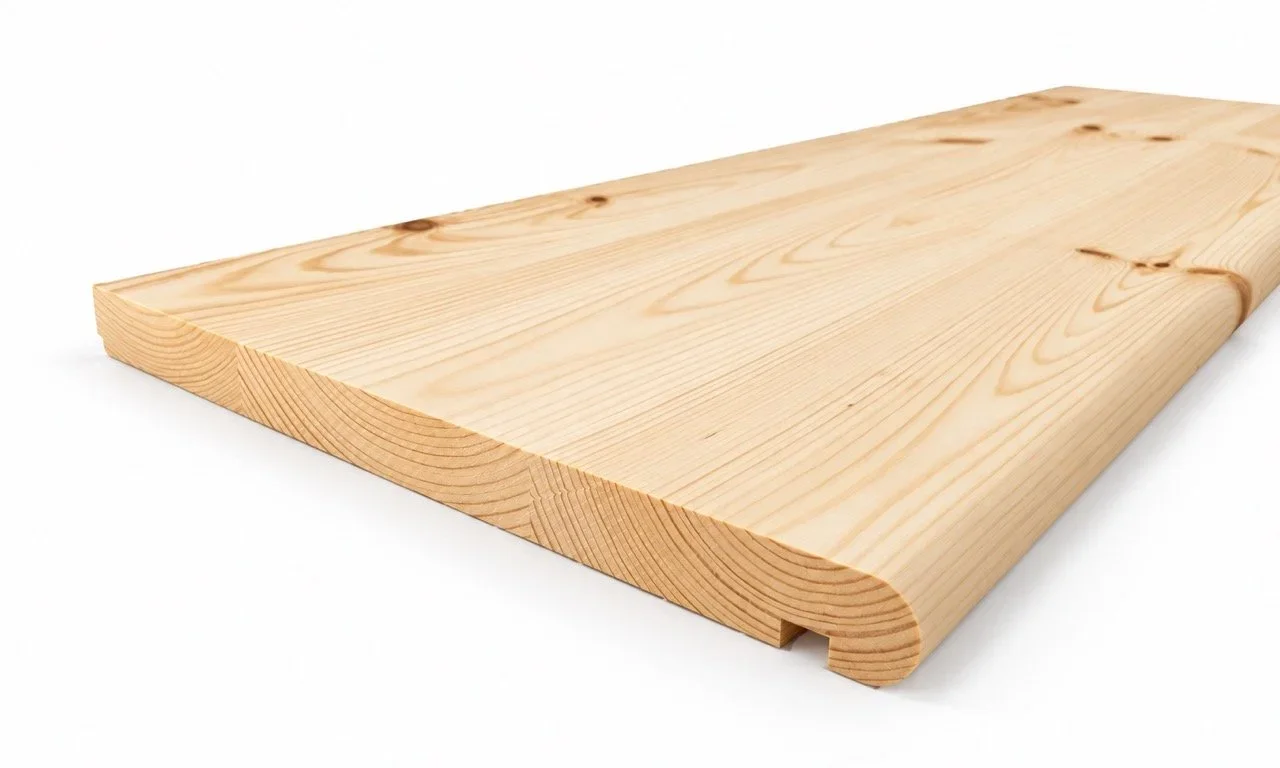
P&L Joinery – Rounded Edge Pine Stair Tread
Oak Stair Treads
Oak is generally better suited to projects where the natural timber will remain visible.
Its distinctive grain and harder-wearing appearance make it particularly popular for premium staircase refurbishments, exposed timber staircases and projects where the staircase itself is intended to become a feature within the property.
The key is to consider the final finish before choosing the timber.
If the staircase will be painted or heavily carpeted, pine may offer the more practical option. If the timber will remain exposed, oak may provide the finish you're looking for.
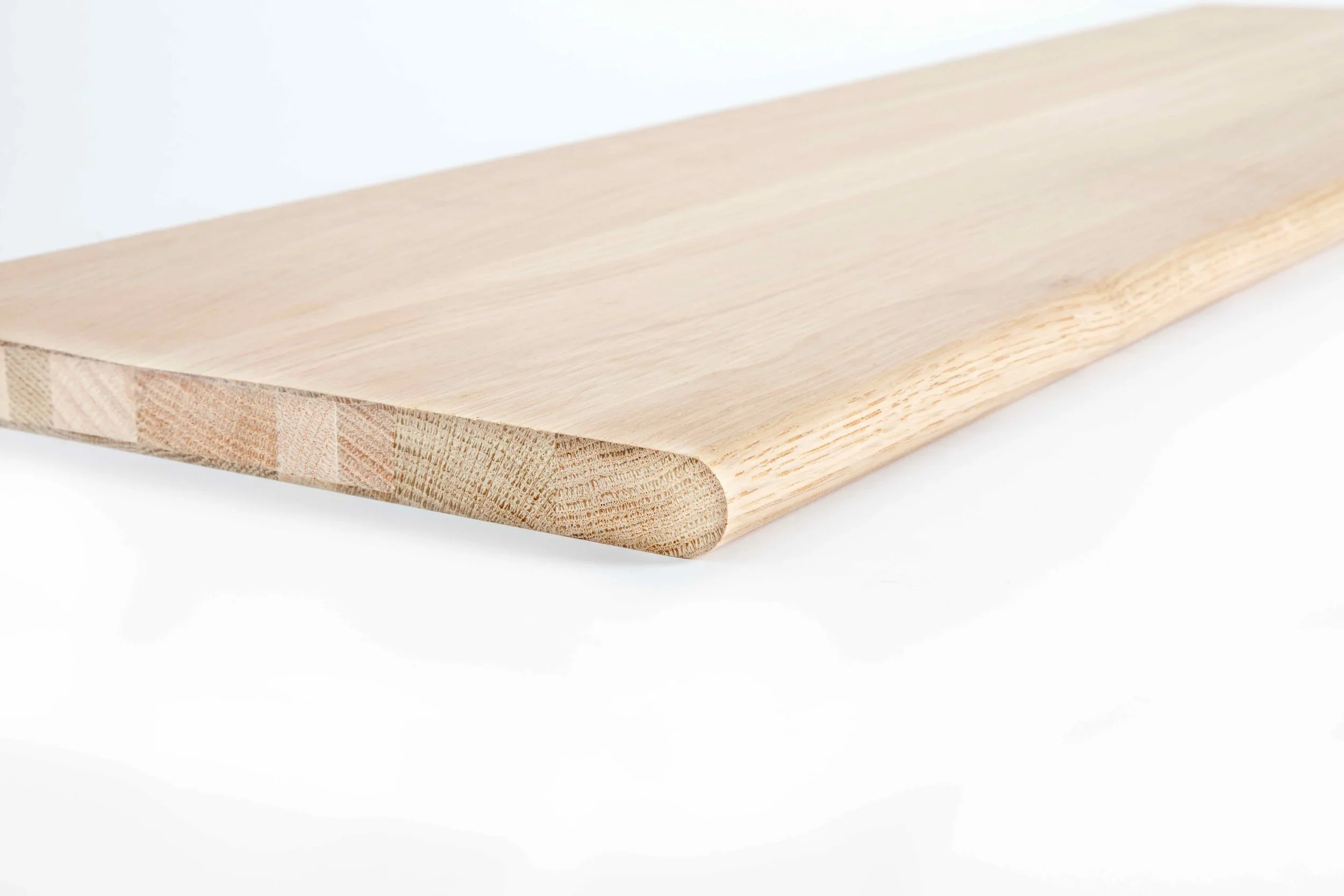
P&L Joinery – Rounded edge Oak Stair Tread
Consider the Finished Look of the Staircase
Before ordering your treads, it is worth thinking about how the staircase will look once the project is completed.
A fully carpeted staircase, painted staircase and exposed timber staircase can all benefit from different tread specifications.
One increasingly popular option is a painted staircase combined with a carpet stair runner.
Rather than carpeting the entire width of the stairs, a narrower strip of carpet runs through the centre of each tread, leaving the edges visible.
This can create a smart, high-end look without requiring a fully exposed hardwood staircase.
For this style of installation, pine can be particularly effective.
The visible edges of the tread can be prepared and painted to match the risers, strings and surrounding woodwork, while the centre section is covered by the runner.
For customers wanting the look of a carefully finished staircase without the additional cost of full oak treads, it can be a very practical solution.
Square Edge or Rounded Edge?
The edge profile of the stair tread also plays an important role in the finished appearance.
Depending on the style of staircase, you may prefer either a square or rounded edge.
Square Edge Stair Treads
Square edges can work particularly well on contemporary staircase designs where clean lines and a more minimal appearance are preferred.
They can also suit painted staircases and modern property refurbishments.
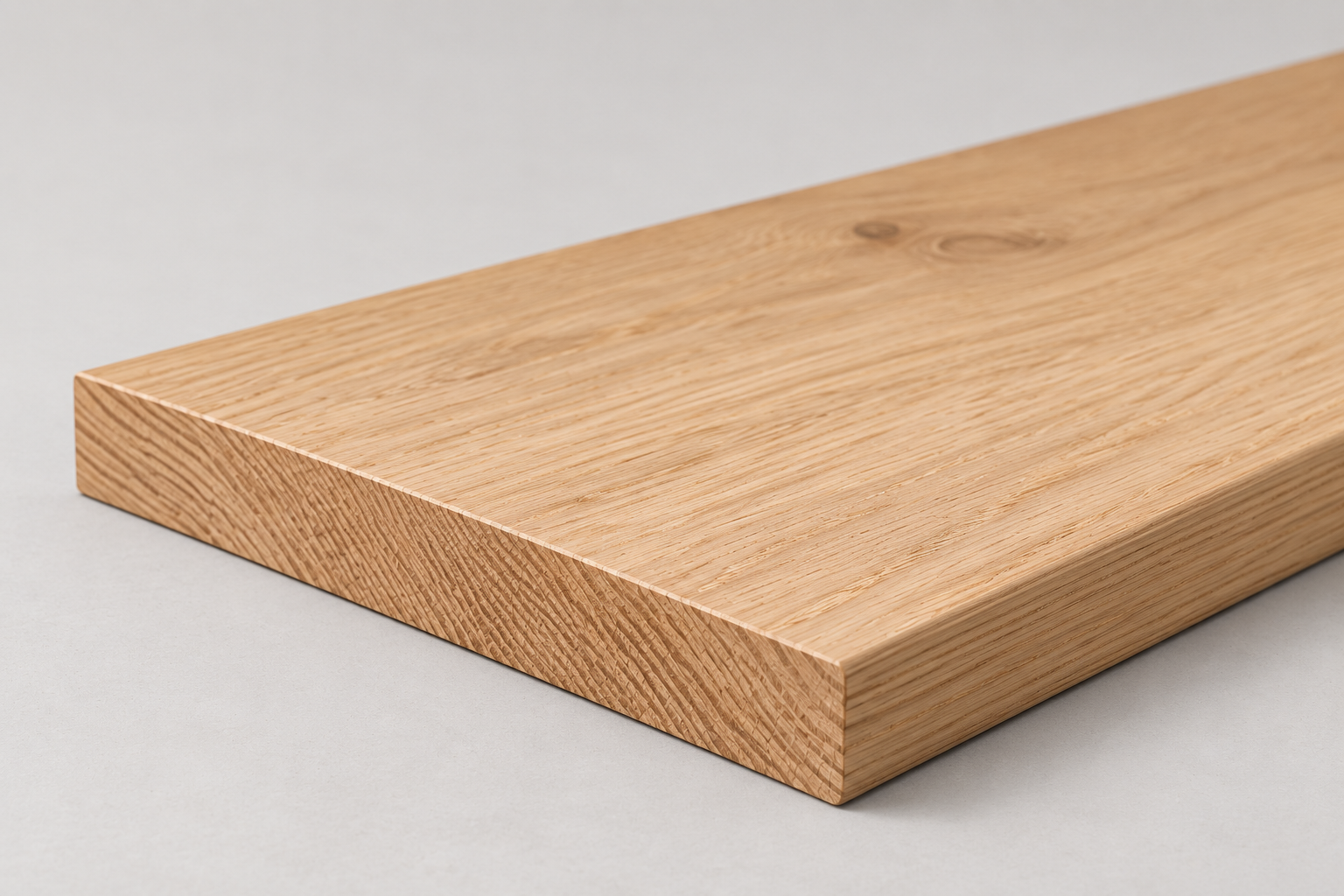
Square Edge Stair Tread
Rounded Edge Stair Treads
A rounded front edge creates a slightly softer and more traditional appearance.
This can be particularly effective on exposed timber staircases or refurbishment projects where the new tread needs to complement existing staircase components.
Choosing between the two usually comes down to the overall style of the staircase and the finish you're trying to achieve.
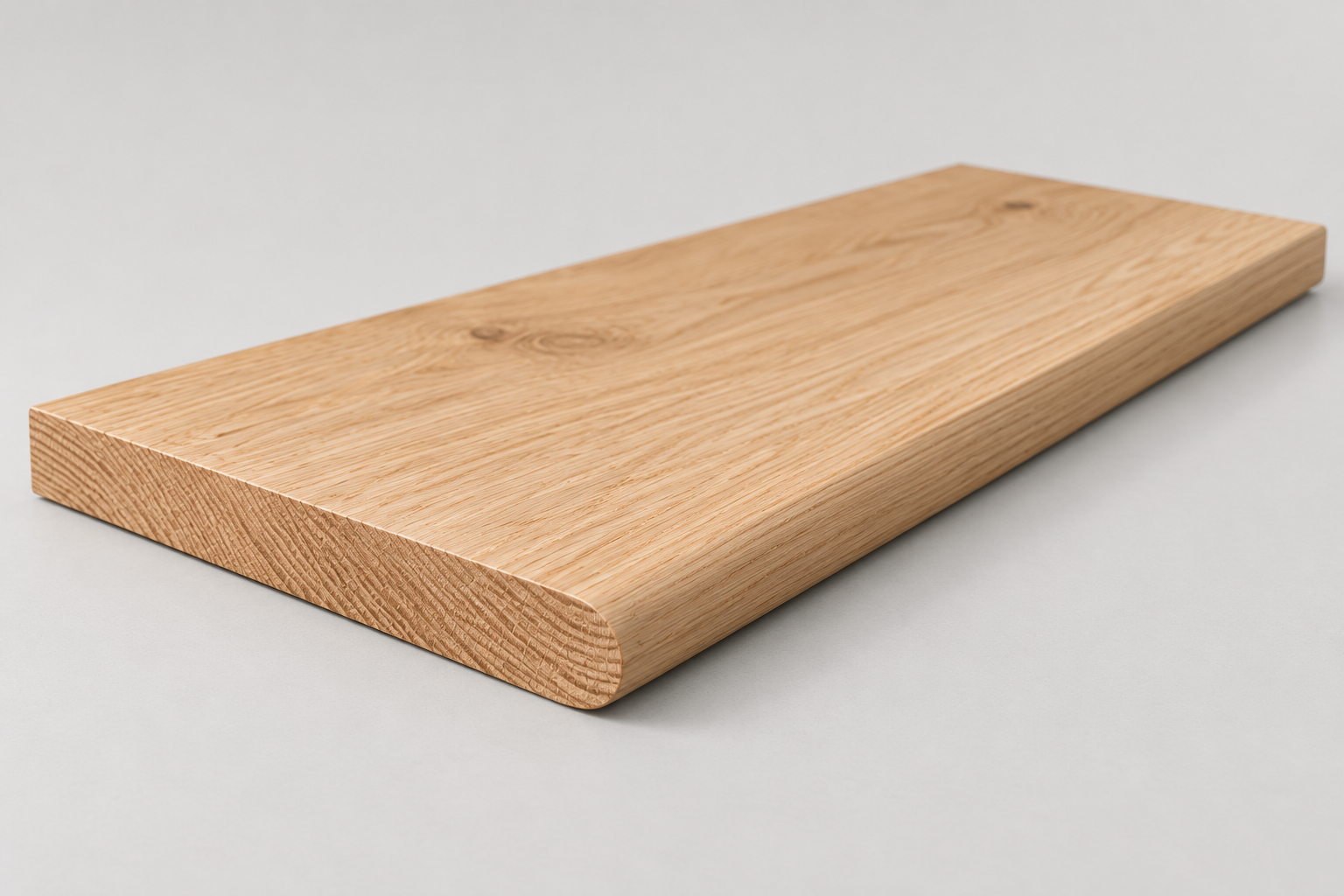
Round Edge Stair Tread
Do You Need a Riser Groove?
Another option to consider is whether the stair tread requires a riser groove.
A riser groove is machined into the underside of the tread and is designed to locate the top of the staircase riser.
For traditional closed-riser staircases, this can make assembly easier and help achieve a cleaner, more consistent joint between the tread and riser.
If you're manufacturing or assembling a staircase, it's worth planning your tread and riser specification together rather than treating them as completely separate components.
P&L Joinery also supplies staircase risers, allowing you to order the main staircase components for your project from the same supplier.
Make Sure You've Got the Right Tread Size
Staircases don't always follow a completely standard specification, particularly when you're working on renovations or older properties.
That's why tread dimensions should always be checked before ordering.
P&L Joinery stair treads can be cut to your required measurements within the dimensions of the tread purchased.
For projects requiring larger or less common dimensions, longer and wider stair treads can also be produced on request.
For tradespeople, this can help reduce additional cutting on site and make installation more straightforward.
When measuring for replacement treads, always check the existing staircase carefully rather than assuming every step is identical.
Think About the Tread and Riser Together
A staircase tread rarely works in isolation.
On a traditional staircase, the tread and riser work together to form each individual step.
When replacing or manufacturing stair components, it's therefore useful to think about both at the same time.
For example, you may want:
Pine treads with MDF risers for a painted staircase
Oak treads with oak-faced risers for a premium timber finish
Pine treads and risers where the entire staircase will be carpeted
Painted pine treads and risers combined with a central carpet runner
Matching the components to the final staircase design can help avoid unnecessary material costs while still achieving the finish the customer wants.
Add a Finishing Touch With a Bullnose Step
The bottom step of a staircase is often an opportunity to add a little more character.
A bullnose step or bullnose tread can create a more substantial feature at the bottom of the flight and help give the staircase a more finished appearance.
They're particularly popular on traditional staircase designs and installations where the bottom step extends beyond the normal line of the staircase.
P&L Joinery supplies bullnose staircase components alongside standard stair treads, making it easy to specify the finishing pieces alongside the rest of your order.


Bullnose steps are primarily used at the bottom of a Staircase to create a feature step. They are available in a variety of materials and Handings to suit your design.
Our standard size is 270mm deep x 1m long, and each comes with a fitted riser of 220mm. these can be supplied loose, please indicate this in the notes section at checkout.
Please note our Double Bullnose steps feature a vertical joint on the riser where the two risers meet at the centre.
If you require a larger size please contact us at sales@p-ljoinery.co.uk for a quote tailored to your requirements.
Which Stair Tread Should You Choose?
The best stair tread depends on the project.
If you're working on a premium staircase where the natural timber will remain exposed, oak is often the obvious choice.
If you're building a painted staircase, fitting carpet or installing a carpet runner, pine can provide a versatile and significantly more economical solution.
The most important thing is to consider the entire staircase before ordering.
Think about:
The final finish
Whether the timber will be exposed
Whether the staircase will be carpeted
The required tread dimensions
Square or rounded edge profiles
Whether you need a riser groove
The type of riser being fitted
Whether a bullnose feature step is required
Specifying these elements together can help produce a better finish and make installation considerably easier.
Stair Treads for Trade and DIY Projects
At P&L Joinery, we manufacture and supply staircase components for trade professionals and DIY customers across the UK.
Our stair treads are available in a range of materials, dimensions and specifications, with options including different edge profiles and riser grooves.
If you're working on a staircase project and aren't sure which specification you need, our team can also help you choose the right components for the job.